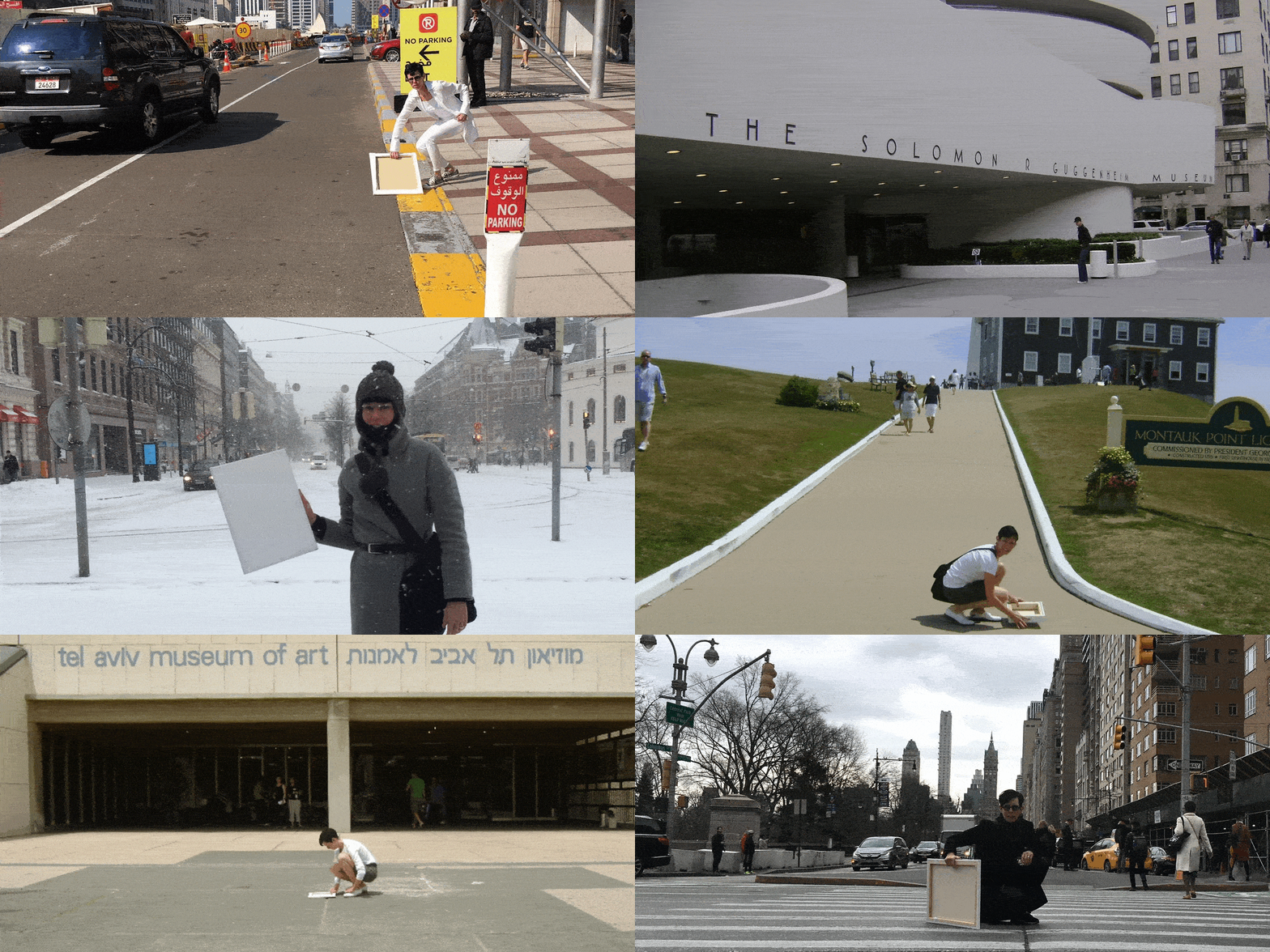
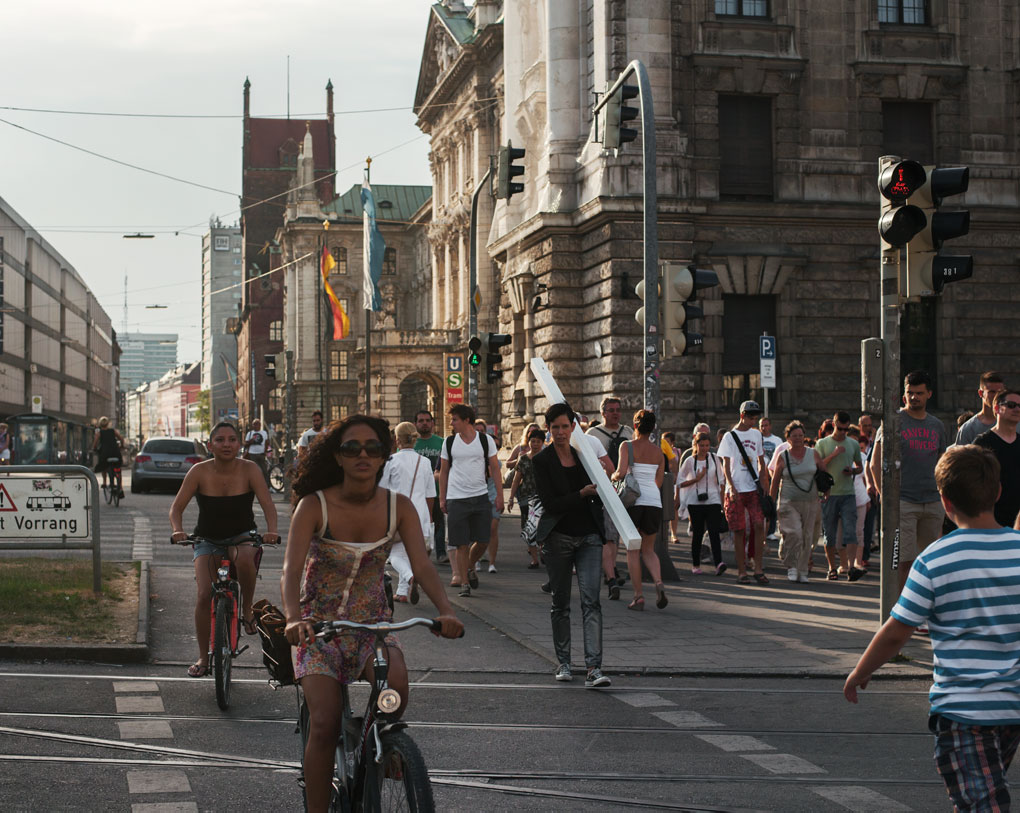
„Caro Jost is aware of the political dimension of the street. In addition to art, she also studied law. Public spaces such as streets and squares are places of democracy – from the Greek agora to today’s market-places, from street fights to sit-ins and glue-on protests. This is where social processes, negotiations, and debates take place. For democracies, it is essential that key issues of coexistence are debated publicly. The Basic Law guarantees freedom of assembly and freedom of expression—the foundation of the right to demonstrate, which marks public space as a deeply political place.“
Excerpt from exhibition text
Johanna Adam, Curator Bundekunsthalle

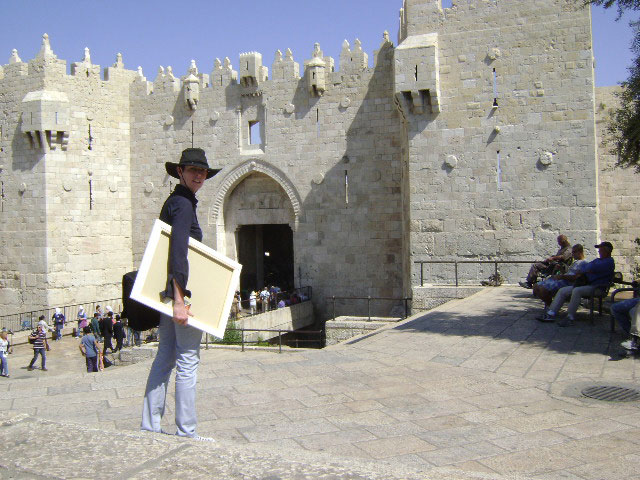
Caro Jost appropriates foreign traces, materials or memories, which she transforms into autonomous art works of both autobiographical and social relevance. Her artistic strategy is about documenting time and historical reality and putting it in a new artistic and contemporary context. Because of that she started to build up her own personal archive of material and photographs in New York in 1998, and since then she has been collecting the material for her works on worldwide trips to locations of art history, artists‘ studios, and archives. This can be self-produced film footage, lost objects or documents that she collects in the archives of her favourite artists, but also snippets of conversations captured by chance or consciously, as well as traces and marks on the streets.
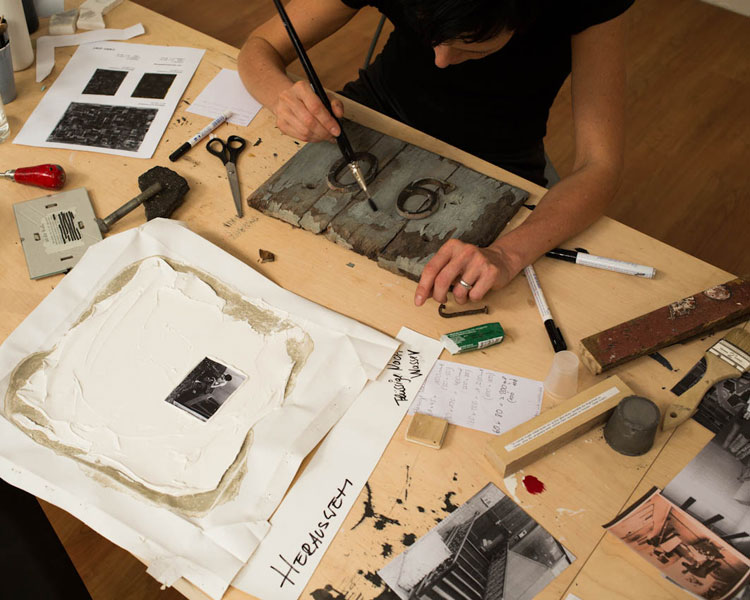


“My work is about Time, Movement, Ephemerality and the ineffectual try to capture the moment for the eternity. I don´t document classically through realistic photography, drawings or cartographic records, but rather transfer found objects and traces of the past into an abstract artwork employing a uniquely developed technique.”
VIDEO >> „Caro Jost talking on her work„, 2018